
DOB/DOD: April 3, 1919 (Norwalk, CT) – May 21, 2000 (Port St. Lucie, FL); 79 years old
MARITAL STATUS: Married Gladys E. Thoele (1920-2011) on June 7, 1941, in Norwalk, CT
CHILDREN: Two sons, David (1942-), and Douglas M. (1943-). Three daughters, Linda Rising Trottier (1946-), Bonnie Rising Boaz (1948-), and Sheryl Rising Skidd (1954-).
LOCAL ADDRESS: 13 Amundsen Street
ENLISTMENT: May 3, 1944
DISCHARGE: December 7, 1945
SERVICE NUMBER: 8990796
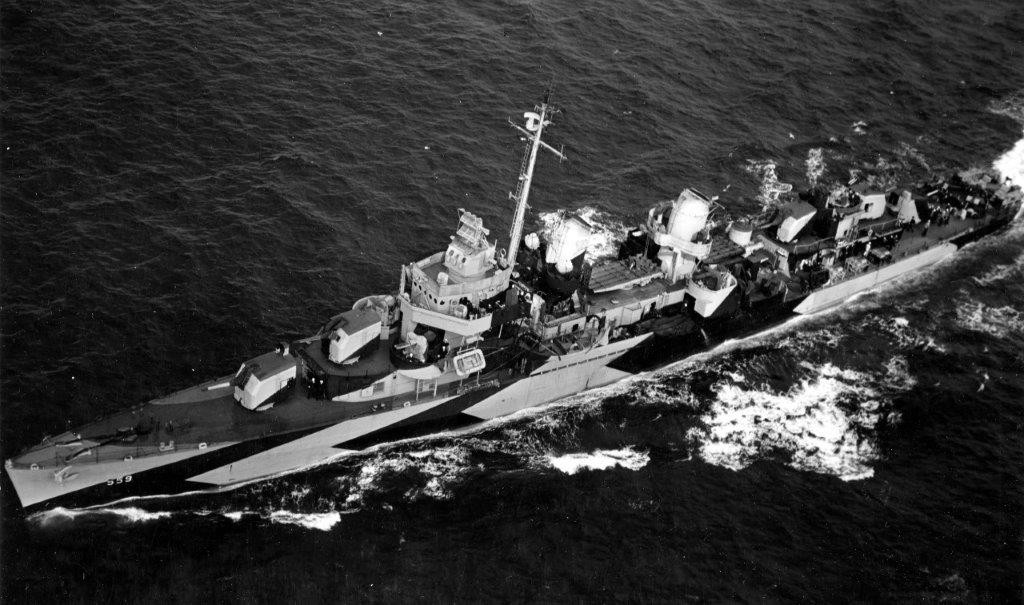
SHIPS ASSIGNED TO: USS Longshaw (DD-559), USS Wharton (AP-7), USS Nantahala (AO-60), USS Lauderdale (APA-179), and USS Salt Lake City (CA-25)
FAMILY: Born to William S. (1876-1957) and Frenetta C. George Rising (1886-1948). Two brothers, William S. Jr. (1912-1980) and George C. (1915-2005).
Norwalk High School Class of 1937

From The Norwalk Hour June 14, 1945
NORWALK MAN IS SURVIVOR IN SINKING OF U.S. DESTROYER
Russ Rising In Disaster Off Okinawa
Skill As Swimmer Saves His Life; Many Others Die; A ‘Horrible Experience’; Scout Training Cited
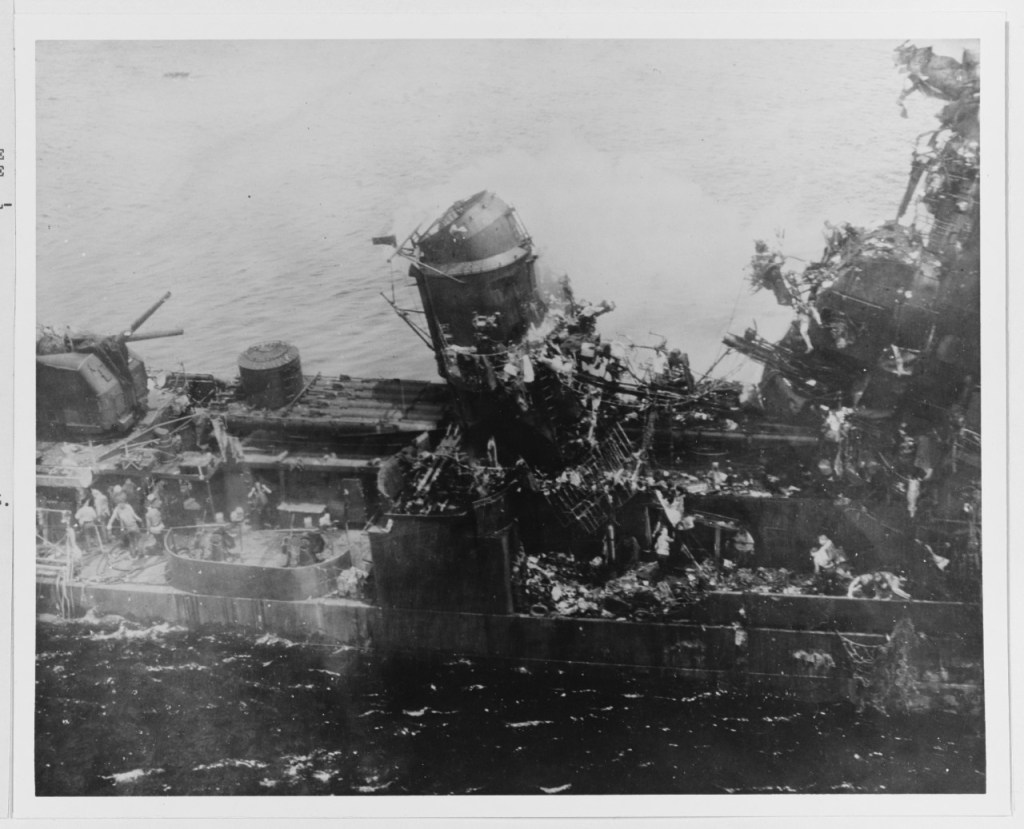
Two Norwalk homes have been made happy by receipt of word to the effect that Russell E. Rising, Fireman Second Class of the U.S. Navy, is among the survivors of the sinking of the U.S. Destroyer Longshaw by the Japs off Okinawa on May 18. What was one of the most tragic chapters of the entire bloody Okinawa campaign entailed 179 casualties out of a crew of from 250 to 350. Fireman Rising’s wife, the former Miss Gladys Thoele, who, with their two sons, David James, three, and Douglas Nathan, two, reside at 13 Amundsen Street, and his parents, Mr. and Mrs. William S. Rising of West Norwalk Avenue, both have received word directly from him that he escaped with his life in the disaster. But it was a narrow escape. From Washington — from the Navy Department — word had come that he had been wounded. So his wife and parents were greatly relieved to get letters directly from him. He had written almost at once following the sinking in order to get word to them quickly. Only the fact that “Russ,” as he is popularly known in Norwalk, is an excellent swimmer, adept at underwater swimming, saved his life in the disaster while many others were burned to death by blazing oil. He described it briefly as “the most horrible experience I have ever had.” He added, “I am all in one piece, but glad that I am a good swimmer.” Vivid details of the loss of the Longshaw, with heavy loss of life, have been supplied by eyewitnesses. The ship had run on a coral reef a mile off Nha and was shelling the Japs in their last-ditch stand on southern Okinawa. She had been on the reef for almost two and one-half hours, and a tug had come to her aid and was trying to remove her when Japanese guns started firing from the direction of Naha. The fifth shell caused a terrific explosion showering the ship’s debris upon men struggling in the water and killing or wounding a large number. More than two-thirds of the destroyer’s personnel were listed as killed, missing, or wounded. The commanding officer, Lieutenant Commander Clarence W. Becker of Salem, Massachusetts, was reported among the 73 missing. One of the men who miraculously escaped death was 21-year-old Radioman First Class James J. Zikus of Peoria, Illinois, who boarded the destroyer from the tugboat to relay reports to the tug skipper and remained aboard even after the destroyer’s skipper had ordered: “Abandon ship.” Finally, he was blown from the bridge into the water. The most vivid account of the disaster was given by the skipper of the salvage tug, Lieutenant John Aikin of Forest Hills, Long Island. He boarded the destroyer and conferred with her captain, then took from a small boat all around the ship before ordering a towing cable made fast. The destroyer had been shifting from the forward magazine to the fantail to lighten the bow. Lieutenant Aikin sent Radioman Zikus aboard the destroyer with a radio set to make reports to the tug’s communications office. “The tug had been trying for eight minutes to rock the destroyer when the enemy shore batteries opened on the destroyer,” Lieutenant Aikin said “The first shot was a near miss, 160 feet off. The second hit the destroyer forward, knocking out some port batteries. “The destroyer, by this time, was countering the enemy guns with its own fire. A third enemy shot hit the bridge on the port side, kicking down the mast. A fifth shell hit the destroyer a minute later, causing a terrific explosion. Men and equipment flew high in the air. That shot must have hit a magazine filled with hundreds of bags of five-inch ammunition. A fuel tank was blown open, throwing two large slicks of burning fuel 150 yards from the ship. Fuel oil also was burning 50 feet all along the port side forward of the destroyer. I believe many of the personnel were burned to death by the burning oil. Two minutes after that terrifically damaging fifth shell, the Japanese shore batteries opened up on my tug. But there were no hits. We fired back with our three-inch and 40 mm guns. After getting clear, we put two motor whaleboats into the water and sent them to pick up survivors. We spent the rest of the afternoon taking survivors aboard and caring for the wounded and the dead. This hip picked up ten dead, six seriously wounded, and 45 survivors. Only two men who were on the destroyer bridge survived. Radioman Zikus was one of them. Asked why he had remained on the bridge after the abandon ship order came, he said, “My orders were to stay on the ship and call information into Lieutenant Barber.” While the exact nature of the Norwalker’s injuries is not known, his duties as a fireman are below deck. He had been on duty in the engine room some time back. It is believed here that he managed to get out as the ship went down and that his ability in underwater swimming enabled him to avoid being badly burned by blazing oil. The family hopes that he will be able to come home soon on furlough. It was incidental to his extensive training as a Boy Scout that “Russ” became an expert swimmer. He was with the Sea Scouts and is among those who have been honored with the Eagle Scout rank, as well as the Bronze Palm. He was thoroughly schooled in first aid. His father today attributed his escape from death off Okinawa to his training as a Scout. “Russ” has been in the Navy for 13 months. He is an installer for the Southern New England Telephone Company. A brother, William Jr., is in the Army in the European area. The three-year-old son of “Russ,” David James, is named the middle name for the pioneer of the Rising family who settled in Salem in 1655. The younger son, Douglas Nathan, is named the first name for General MacArthur.
From The Norwalk Hour May 24, 2000
Russell E. Rising, 81, of Port St. Lucie, Florida, a former resident of Norwalk, died Sunday in Port St. Lucie. He was the husband of Gladys E. Thoele. He was born in Norwalk, the son of the late William and Fernetta Rising. He was a 1937 graduate of Norwalk High School and a member of the Boy Scouts, where he was an Eagle Scout. Mr. Rising was a U.S. Navy veteran of World War II and a recipient of the Purple Heart. He had been employed by Southern New England Telephone Co. and Stauffer Chemical Co. in Connecticut. He was a member of Old Well Masonic Lodge in East Norwalk for 50 years, a member of the Elks, the High Twelve, and the Masonic Club of Port St. Lucie. In addition to his wife, Mr. Rising is survived by six children, David Rising of Plantsville, Douglas Rising, and Sheryl Skidd, both of Norwalk, Linda Trottier of Port St. Lucie West, Fla. Bonnie Boaz of Chapel Hill, N.C., and Russell C. Rising of Chester Springs, Pa.; 15 grandchildren and eight great-grandchildren. A celebration of life will take place Saturday at the Russell Rising home for the immediate family. A memorial service will be held in the fall at First Congregational Church of Port St. Lucie. The family requests that contributions be made to a favorite charity or to First Congregational Church, 2401 S.E. Sidonia St., Port St. Lucie, Florida 34952.
Burial details are unknown
END
Discover more from Honor Norwalk CT veterans
Subscribe to get the latest posts sent to your email.
 Honor Norwalk CT veterans